NIICE 18 th Dialogue Series on “The Indian Ocean: Traditional Security, Non-Traditional Security, and the smaller states”
असोज ८, २०८१, मङ्गलबार | दिउँसो १२:५२ बजे | 70
Manila Prajapati
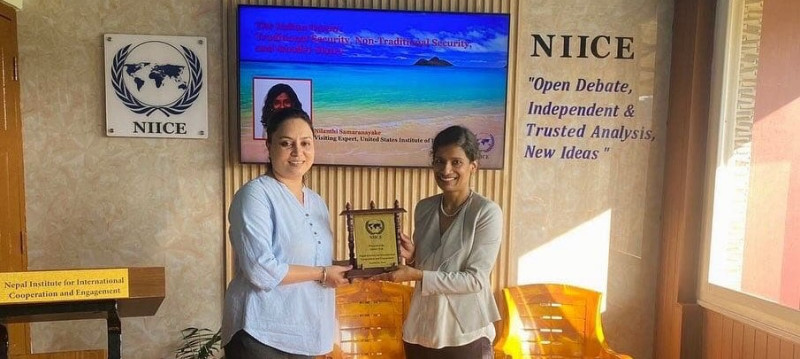
Nepal Institute for International Cooperation and Engagement (NIICE) an independent, apolitical and non-partisan think tank based in Nepal which works on foreign policy, security studies and development issues, organised its 18th Dialogue Series titled “The Indian Ocean: Traditional Security, Non-Traditional Security, and the smaller states” with Nilanthi Samaranayake, Visiting expert, United States Institute of Peace as the keynote speaker, on Monday.
The event was focused on regional security in the Indian Ocean. The dialogue promised to offer expert insights into: Traditional and Non-Traditional challenges and the strategic significance of smaller states, and the impact of U.S. alliances and regional partnerships. It highlighted the strategic role of smaller states and provided insights into U.S. alliances, regional collaborations, and the complexities of great power rivalries in the Indian Ocean region.
A Visiting expert from the U.S. Institute of Peace, Nilanthi Samaranayake emphasized the importance of the Indian Ocean region amid rising global attention to the Indo-Pacific. The Indian Ocean, home to 33 countries and about 2.9 billion people, is crucial for global trade, with significant economic implications for both regional and extra-regional countries like Nepal. She highlighted the dual nature of security challenges in the region, including traditional issues like power competition between India and China, and non-traditional threats such as climate change and human trafficking. Smaller states in the Indian Ocean often navigate these dynamics with limited resources, seeking to maintain sovereignty while managing relationships with larger powers. She further noted that despite the region’s strategic significance, U.S. policy documents have offered limited guidance specifically for the Indian Ocean. However, U.S. objectives appear to focus on ensuring freedom of commerce, maintaining military access, and supporting regional stability, particularly through cooperation with allies like India. The address also underscored the interconnectedness of traditional and non-traditional security issues, advocating for greater regional collaboration on challenges like illegal fishing and environmental security. Nilanthi acknowledged their limited expertise in U.S. climate security but shared personal observations. She highlighted that climate security has gained attention, especially within the U.S. military, which recognized its relevance due to impacts like rising sea levels on military infrastructure. She emphasized that while climate security may seem slow-moving and less urgent than immediate disasters, its human security implications are significant and warrant greater awareness and discussion.
Nilanthi noted that the Indian Ocean currently reflects dynamics similar to those of the Cold War, particularly regarding the strategic importance of countries like the Maldives and Sri Lanka for military refueling. During the Cold War, powers like the U.S. and the Soviet Union sought access to these locations, just as China is now making its presence felt with research and survey vessels, causing concern among regional countries

Comments